Monday, December 20, 2010

The Use of Color in my Oil Paintings

Evening Calm
Status: sold

Many of you would be surprised that I started painting from the beginning with oil colors. I started with oil, and it is only later that I also began using acrylic, pastel, and doing sketches. For me, the whole process happened in the reverse way. Art students in art colleges would find it difficult to believe this.

Actually, what influenced me to take up oil colors first? A friend. He is a good artist, who paints regularly. He has given up his day job, supports a wife, pays mortgage for a new home, with his earnings from art. Isn't that great? He has done well enough to do all this. I admire him. He has always been my role model. I have looked up to him. Initially I was in awe of his talent. Now I admire him as an excellent fellow artist.

So I began with oil colors. Those days I was living in New Delhi, India. Due to the dry weather characteristic of New Delhi, I had a great time painting with oil. Especially because it dried so fast there due to the minimum moisture in the air. In that period, I was able to paint quite a few oil paintings, and fast too. I did not have to wait ten days between layers, for them to dry.

After relocating to Santa Barbara, California, the drying of colors has been a major issue. Initially I was frustrated that the paint took forever to dry. Then I discovered a drying agent. That helped somewhat. But I had to wait for the color to dry anyway, of course for less time.

And now I discovered acrylic colors - its quick drying effects. For places like here, acrylic is great. I'm loving it. And then, I've also been trying my hand at pastel.

Framing of Paintings

Below are samples of different kinds of traditional ornate frames for painting:


Before the advent of modern art, before art installations assumed the centerstage in the avant garde art market, there was something that was the most popular way of bringing beauty into a house or a building. The two-dimensional painting. Artists painted scenes from everyday life like reading, kitchen, gardening, etc. Flowers were a popular theme. It gave both color, and simple beauty. And to capture everything in a painting, was the frame. The quality of the frame, how ornate or imposing in size it was, showed the status of the owner, as they came in high prices only. Frames were hand carved by master craftsmen, finished and polished. The gilt frames were most valued.

Even nowadays, in art galleries where old masters are exhibited, these kinds of frames are the only ones used with their work. They show off the effects, colors and brush strokes most effectively and to the best advantage.

With the minimilastic present day form of art, frames have become less or not ornate at all. Simple flat straight edged frames are used for water color and pastel artists. And many oil artists have done away with frames at all.

Saturday, December 18, 2010

Pastel painting is enjoyable!


Landscape, pastel.
Status: Sold


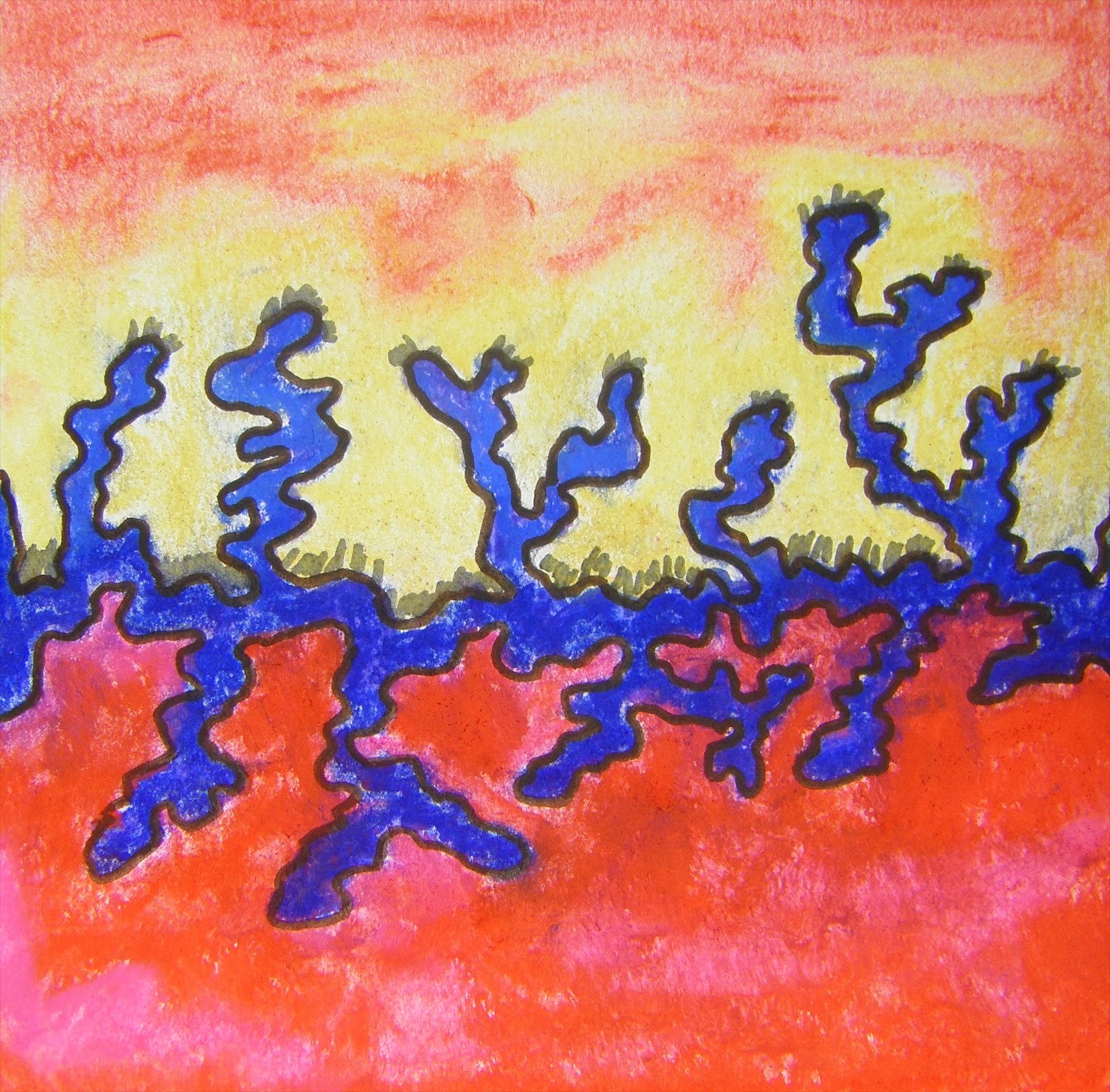
I'm gradually discovering the magic of pastel painting. I've had a large box of oil pastels from years. Occasionally, I had tried using it, but not for long. Then one day I bought a book of pastel papers by Fabriano. And the wheel started spinning.

From vague sketches, I have graduated to detailed drawings, and then to paintings.

The most arresting feature, apart from the high saturation of the color of pastels, is the texture that goes with the application of pastels. Is it only me who is so hung up on texture? The whole premise of pastels is texture of the ground. No texture, no pastels. It is the ground that holds the loose particles of the color, and then a binding agent is applied when the work is completed.

The fascinating feature is also the different qualities of oil pastels as compared to soft pastels. Using soft pastel is like applying butter to paper. It is also like skating on smooth ice, isn't it? The painting gets done fast, and one needs to distrbute the colors and then fix it.

Usage of oil pastels requires a little bit more of pressure from the fingers than in soft pastels. But the effect is so amazing. And if I use smaller size paper, I finish quickly and get a new painting in a few hours. How about that. I can finish 2 pictures in a day. Isn't that great? There is such a sense of accomplishment when I am able to do that.

One of the important aspects of a pastel painting is to store, display or preserve it in the correct way. That means, it should be fixed. Fixing the colors is good for keeping the work appear the same as it was in the beginning. After the fixative has dried, the next step should be to keep it framed. It is the best way to enjoy a piece of art.

After all, isn't a thing of beauty a joy forever? And, when the thing of beauty can be seen on the wall, what more does one want to make a day beautiful and happy?

Friday, November 19, 2010

More Thoughts on Art, Art Marketing and Publicity

Mendicant, oil on canvas, 30"x20"
Status: available

Artists love to create their stuff. Many of us like to remain engrossed day and night in our media, our canvases, our paints, etc. etc. We stay awake whole nights to finish a piece. We think about it when we are not working at it, and thus become the subject of our family and friends' jokes because of our absent mindedness. That is the lot of all artists, we say. That our end is to create art, the things we love.

But is it enough to just create? What is the goal beyond this? Should we conceive an idea, then spend days and nights making it, and when it is finished, should hang it up on our walls for good? Eternity would find these pieces on our walls when we are not there anymore?

Many artists among us would disagree on that. What is the purpose of art? Is it to show just beauty, so that the world becomes a more beautiful place? Many modern pieces of art would not fit the label of 'beautiful things'. They may even be ugly.

So, is the purpose of art to educate the world? Some would stress this fact vehemently. Art educates the world. Especially by encapsulating the present, it records the present, and preserves it as history for future generations.

Therefore, spreading art becomes important. And thus, marketing of finished art, through publicity, and sales, enters the list of things that an artist needs to do. And many artists are inept in that.


Thursday, November 18, 2010

What is Art? A Question I Often Ask Myself


The above pictures were taken at Pismo Beach in California, during a trip to Arroyo Grande to meet a friend. Our friend led us to the beach, and then the cliff, from where the drive through beach was visible at a distance. On the edge of the cliff, was this small park like feature with provision to sit and enjoy the landscape. It also had a few small but strikingly beautiful flower plants.

That was months ago. But what has remained firmly printed on my mind about that trip are these pictures of the flowers. Even thinking about them fills me with unimaginable joy. The other elements of that trip have become remnants by now, and not very clear.

Were those flowers art? They were not part of a painting or a sculpture. But they were there, at that moment, and even afterwards, some of the most beautiful things ever created. And now, the question arises - who created these flowers, this divine beauty?

Art Marketing and Similar Topics

Landscape, soft pastel on paper, 6"x6"
Status: available

With the art market once going into a slump simultaneous to the current recession, many questions have risen in artists' minds all over. How to market in such an economic condition? Would art hold an important place when other needs are to be met more urgently?

The traditional methods of selling art are still available. Gallery shows, group shows in public buildings, weekly and periodical shows, curated national and international shows, competitions are a few at the top of the mind. Beyond that, the other way to market has been through word of mouth, referrels, catalogues, advertisements.

Very few artists are now unaware of the great importance the latest electronic media, the Internet, has assumed on the context of marketing art. A lot of debate is going on about whether artists generate sales through the internet, but whatever is the result, utilizing this media for marketing and publicity is gaining popularity.


Wednesday, November 17, 2010

Some New Thoughts on Art

Can there be any new thoughts on art? The same things keep coming and going. They rise in the mind, then disappear, then rise again.

This is most true of work that has been started, worked on for some time, then abandoned for some time, and then picked up again. Why does some work (most work, to be correct) require such an incubation period/ And why do they emerge better, afterward. Even though the initial thought with which the work was begun, had changed.


Fair Weather
Oil on canvas
50"x40"
Artist: Anuradha Rajkumari
Status: sold

The above mentioned painting is one such example. It was started and finished in the year 2007. But much went into its initial conceptualisation, then execution. Not only because it was a large canvas, but also because I was experimenting with colour and texture.